


Partial knee replacement is a knee replacement surgical procedure designed to treat arthritis that affects only one part of the knee. Instead of replacing the entire joint, only the damaged portion of the knee is resurfaced, allowing the healthy parts of the knee to remain intact. This approach helps relieve pain while preserving more of the natural knee structure.

Partial knee replacement involves removing the worn or damaged portion of the knee joint and replacing it with metal components. A highly durable polyethylene insert is placed between the metal surfaces to restore smooth joint movement.
Unlike a total knee replacement, the remaining compartments of the knee are preserved, including the ACL. Because more of the natural knee is maintained, many patients report a more natural feeling knee after surgery.
Partial knee replacement is typically recommended for patients whose arthritis is limited to a single compartment of the knee.
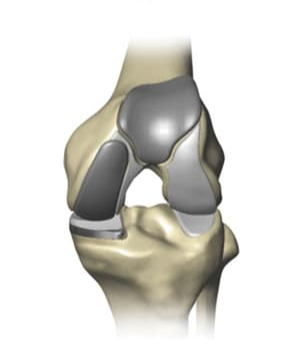
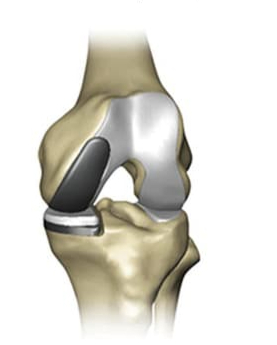
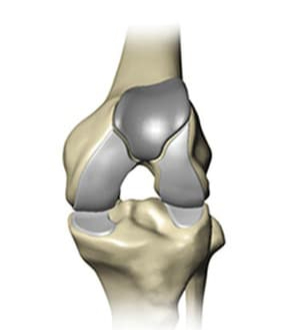
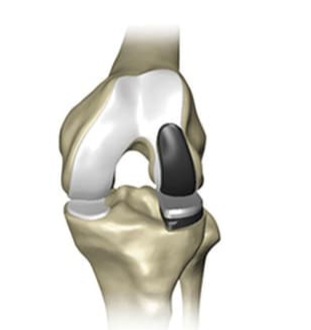
Partial knee replacement offers several advantages for appropriately selected patients. Because the procedure is less extensive than a full joint replacement, it allows for preservation of healthy bone and soft tissue.
Patients often experience a smaller incision, less disruption to surrounding structures, and a faster recovery compared to more extensive procedures. Many also report improved knee function and a more natural range of motion.
Patients may be candidates for partial knee replacement if they have arthritis confined to one area of the knee and have not found relief with conservative treatment.
Conservative treatment options typically include anti inflammatory medications, injections, physical therapy, weight loss, and activity modification.
An intact ACL is required for partial knee replacement. Patients with arthritis affecting multiple compartments of the knee or with certain ligament injuries are generally not good candidates for this procedure.
After your initial evaluation, additional steps are required to prepare for surgery. Lab work and an EKG are performed to ensure that you are medically ready for the procedure.
If robotic assistance is being used, a CT scan may be ordered to assist with surgical planning. You will also complete a pre surgery education program that outlines the procedure, recovery expectations, and preparation steps.
If you are under the care of a specialist for other medical conditions, coordination for surgical clearance will be arranged to ensure a safe procedure.
Partial knee replacement begins in the preoperative area where anesthesia is administered. Most patients receive a spinal anesthetic along with a nerve block to help control pain.
A small incision is made over the knee, and a minimally invasive muscle sparing approach is used to access the joint. The damaged portion of the bone is carefully removed, and trial components are placed to assess alignment, stability, and range of motion.
Once proper fit and function are confirmed, the final implants are secured in place. The incision is closed using dissolvable sutures, and a dressing is applied.
Most patients are able to return home the same day once they are walking safely, managing pain, and meeting discharge criteria.
Recovery from partial knee replacement typically takes about three months, with most progress occurring in the first six weeks.
Patients begin walking soon after surgery and start physical therapy within a few days. A combination of guided therapy and home exercises is important for restoring strength and motion.
Swelling, bruising, and discomfort are expected in the early stages of recovery. Regular movement, icing, elevation, and proper nutrition all support healing.
By two weeks, patients are expected to achieve full knee extension and approximately 90 degrees of bending. By six weeks, most patients reach greater range of motion and are returning to normal daily activities.
Complications are uncommon but can occur. Early risks include infection, blood clots, and stiffness. Preventative measures are taken to reduce these risks, including medications and specific preoperative protocols.
Long term risks include implant loosening, progression of arthritis in other parts of the knee, or instability. In some cases, revision surgery may be required if additional joint degeneration occurs.
Caring for the knee after surgery and following recovery guidelines helps reduce the likelihood of complications.
Can I kneel after partial knee replacement?
Yes, kneeling is allowed and does not damage the implants. Some patients may find it uncomfortable, and padding is often helpful.
Can I use stairs after surgery?
Yes, stairs are encouraged as part of recovery and can often be done the same day as surgery.
When can I return to sports?
Many patients return to activities such as golf, swimming, or pickleball within six weeks to three months depending on recovery progress.
When can I return to work?
Most patients are fully cleared by three months, though many return sooner depending on the physical demands of their job.
Is partial knee replacement painful?
There is expected discomfort, especially in the first two weeks. Pain is managed with medication, activity progression, and therapy.
How long does pain last?
Pain typically improves significantly within six weeks, with continued improvement over three months.
When can I drive?
Driving is usually allowed after two to six weeks depending on which knee was treated and when you are no longer taking strong pain medication.
Dr. Catherine Cahill is certified by the American Board of Orthopedic Surgery and has performed thousands of joint replacement procedures. She performs a high volume of partial knee replacements each year, along with total hip and knee procedures and revision surgeries, with a focus on precision, patient outcomes, and long term joint function.