


When a knee replacement no longer functions the way it should, revision total knee replacement may be needed to correct the problem. Common reasons a knee replacement may fail include infection, loosening from the bone, ligament instability, stiffness, or wear of the plastic component. Depending on the cause, revision surgery may involve replacing one part of the implant or revising the entire knee replacement.
Revision total knee replacement is a procedure performed when a previous knee replacement has failed and needs to be redone. Unlike a first-time knee replacement, revision surgery is tailored to the specific reason for failure and may be more complex depending on the condition of the implants, surrounding bone, and soft tissues.
Common causes of failure include infection, loosening of the components from the bone, instability due to ligament problems, arthrofibrosis, and wear over time. The goal of revision surgery is to restore stability, reduce pain, improve function, and help patients return to daily activities with greater confidence.
Patients who have had a previous knee replacement and are experiencing pain, loosening, infection, instability, stiffness, or limited motion may be candidates for revision knee replacement. In some cases, less common issues may also require the implant to be redone.
Candidacy depends on both the condition of the knee replacement and the patient’s overall health. Sometimes surgery is delayed until medical conditions are optimized, and clearance from specialists such as a cardiologist may be needed to make surgery as safe as possible.
Can I do stairs after surgery?
Yes. Patients are encouraged to do stairs as their muscles recover, and many are able to do stairs as early as the same day as surgery.
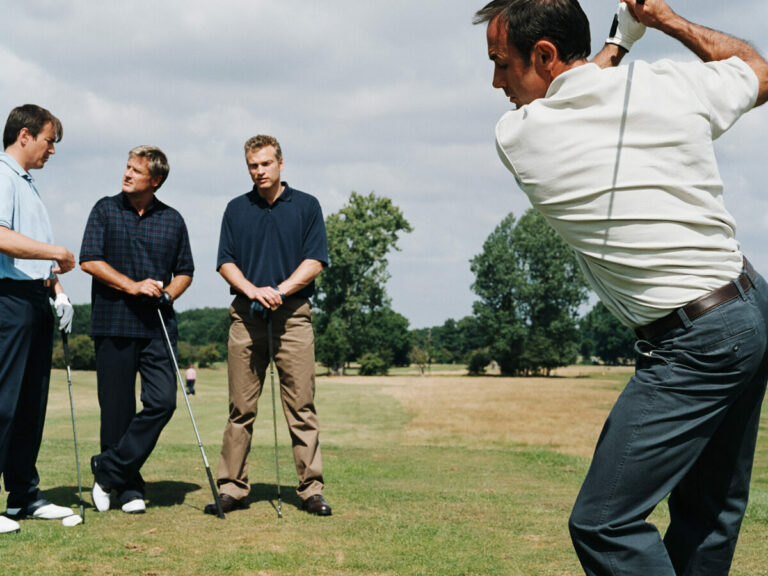
When can I return to sports like golf, tennis, swimming, or pickleball?
Many patients can return to sports between 6 weeks and 3 months depending on how quickly they recover. High-impact exercise is generally not recommended after revision knee replacement.
When can I return to work after revision knee replacement?
Patients are often given up to 3 full months to recover before returning to work if needed. Some people return sooner, especially if their job does not involve prolonged activity or heavy labor.
Is revision knee replacement painful?
Revision knee replacement can be painful, especially during the first 2 weeks. Icing, elevation, movement, and physical therapy can help reduce pain and support a smoother recovery. Pain medication is also prescribed after surgery and can be adjusted when needed.
How long does the pain last after surgery?
The first 2 weeks are usually the most uncomfortable. Pain and soreness are still common during the first 6 weeks, with gradual improvement over about 3 months. Some patients may continue to notice aches and pains longer, and full recovery can take up to 1 year.
When can I drive?
After a right knee revision, driving is usually avoided for 4 to 6 weeks. After a left knee revision, many patients can drive after 2 to 3 weeks once they are no longer taking high-dose pain medication.
After your evaluation, if revision surgery is recommended, several pre-surgery steps will help prepare you for the procedure. Lab work and an EKG are typically ordered to confirm that your health is optimized and that there are no concerns for anesthesia or surgery.
Your medical history and test results will be reviewed during a preoperative appointment before your scheduled surgery. If you have not been very active before surgery, physical therapy may also be recommended to help improve readiness for recovery.
Many patients will complete a pre-surgery online class to review the procedure, recovery expectations, and discharge planning. You will also receive a checklist of pre-surgery tasks so it is easy to stay organized and complete each step before your operation.
If you see specialists for conditions that may affect surgery, your care team will coordinate clearance to help make the procedure as safe as possible.
Revision knee replacement begins in the preoperative area where anesthesia is administered. In many cases, anesthesia includes a spinal, which makes the legs numb during surgery, along with an adductor canal block to help with pain control.
Once in the operating room, sedation is given so you can rest comfortably throughout the procedure. Before surgery begins, the surgical team reviews the treatment plan together.
A tourniquet may be used during the operation to reduce blood loss. The surgeon typically uses the prior incision to access the knee joint. After the old implants and surrounding bone are exposed, the exact surgical steps depend on the reason for revision. This may involve removing one or more components and replacing them with new implants designed to restore alignment, stability, and function.
At the end of surgery, the incision is closed with dissolvable sutures so there are no staples or stitches to remove. A dressing is placed over the incision, and you will then go to recovery before moving to your room and completing the requirements for discharge.
Most patients are able to go home the same day or the next day after surgery. Before discharge, patients should be able to walk safely with a walker, control pain adequately, use the restroom, and tolerate eating and drinking.
Recovery after revision total knee replacement usually takes about 3 to 4 months on average, with the greatest improvement often happening during the first 6 weeks. While recovery varies from patient to patient, staying mobile and participating in rehabilitation are important parts of regaining motion and strength.
After surgery, patients usually rest for a day or two and then begin outpatient physical therapy 2 to 3 days per week. Revision knee replacement can be painful, especially early on, so pain medication is provided to help make recovery and physical therapy more manageable.
During the first two weeks, daily movement is very important. Bending and straightening the knee, walking regularly, icing, elevating the leg, and using a stationary bike as recommended can all support recovery. Swelling and bruising are normal during this time.
At the 2-week visit, the incision is checked to make sure healing is progressing well, and the dressing is usually removed. The range-of-motion goal at this stage is full extension and 90 degrees of bending. It is also normal to still be using a walker or cane. In some cases, specialized collagen dressings may be recommended for patients at higher risk for wound-healing issues.
Around 6 weeks after surgery, an X-ray is typically obtained in the office. By this point, motion goals are usually full extension and about 120 degrees of bending. Many patients no longer need a walker or cane and may be released to more normal daily activity. Even so, some residual swelling, warmth, and aches are common at this stage.
If recovery is progressing more slowly or motion goals are not being met, another follow-up may be scheduled around 3 months after surgery. After that, the next routine follow-up is often at 1 year to repeat X-rays and evaluate the knee replacement.
If the revision was performed because of infection, full recovery may take longer and sometimes requires multiple surgeries.
Physical therapy is an important part of healing, but it does not replace daily home exercise. Frequent icing, regular walking, elevation, gentle motion work, and good nutrition with high protein intake can all support healing, improve energy, and help patients recover more fully.
Complications after revision knee replacement are uncommon, but every patient should understand the potential risks before surgery. Three early risks include infection, blood clots, and stiffness. Medications, special cleansing soap, and nasal decolonization may be used to reduce the risk of infection and blood clots.
Stiffness is best prevented by following the recommended home exercise plan and participating fully in physical therapy. Other rare complications can include ligament or tendon injury, artery or nerve injury, and medical complications such as heart attack or stroke.
Revision knee replacement generally carries more risk than first-time knee replacement. Infection remains uncommon but is more likely than in a primary procedure. Revision implants may also take on a greater stabilizing role, which can increase the risk of loosening over time.
Even after the early healing period, there remains a long-term risk of implant loosening, instability, or infection. These problems are uncommon, but they can happen years later and occasionally require additional surgery.
Dr. Catherine Cahill is certified by the American Board of Orthopedic Surgery and has performed more than 5,000 total joint replacements. She performs hundreds of joint replacements each year, including a high volume of revision total hip and revision total knee replacement procedures.